Film audio is characterised by a heavy dependency on post-production techniques. This includes dubbing, Foley, and audio dialogue replacement (ADR). In motion picture film it is common practice for the soundtrack to be constructed separately from the moving image. Production dialogue is often replaced in post-production after the film has actually been shot. Animation and game sound are also constructed using similar processes, albeit in a slightly different order.
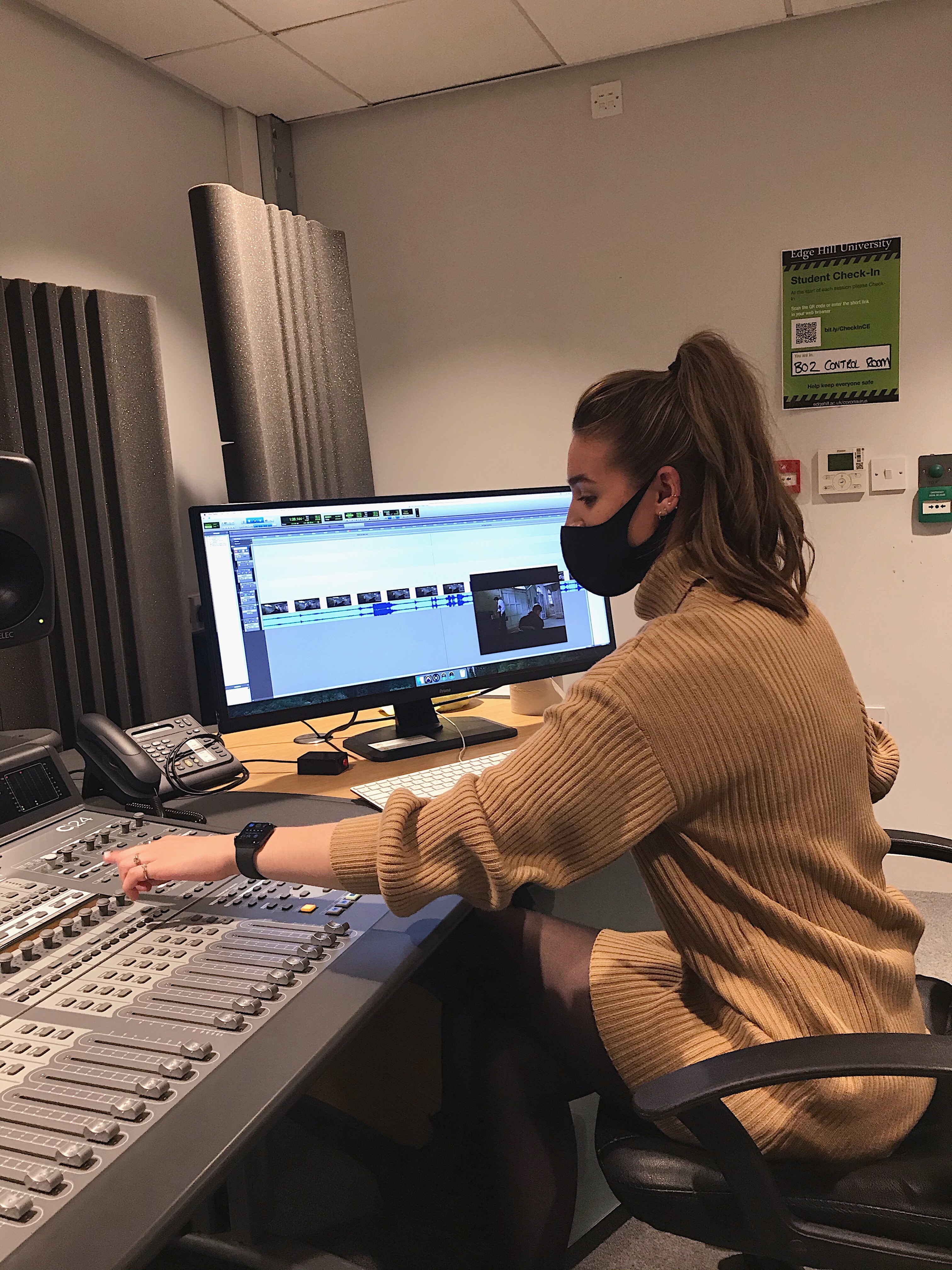
This module builds upon the MED1202 SFP (sound for picture) and MUS2170 Soundtracks modules and has allowed us to immerse further in the audio software and hardware used in motion picture production. We worked in a post-production facility and developed critical listening skills and a working knowledge of how Foley and ADR can be used to shape the narrative of the moving image.
To begin our task, we selected a film clip that was appropriate and could help us meet the standards for the soundtrack assessment. As a group, we decided to use a clip from Reservoir Dogs by Quentin Tarantino. The scene the famous Mr Blonde cop torture scene. Mr Blonde is terrorising the cop, just before he maniacally dances around and cuts off the cop’s ear. We selected this clip as it had a good amount of foley and dialogue that we could replace. Once the clip was selected, we then began to spot all of the dialogue on one project and all of the foley on another. In doing this, this allowed us to be fully prepared for the recording session by having all the sounds needed, noted down and ready to record. This also saved sufficient time, ensuring we knew what we were recording when we started the session. We handed out roles to different group members, such as who would bring what foley items and who would be doing the voice acting.

We booked a session in the Creative Edge studios and used a few hours to capture all of the foley sounds. For this, we used a Boom Shotgun microphone, that has a directional lobar polar pattern. This means the microphone only picks up sounds directly in front of it, capturing anything close to the microphone. With the microphone being directional, it is perfect for capturing sounds for foley, such as footsteps or a slapping sound, as there will be less background noise in the audio. We set up a Protools session and created a new track for each sound needed, as this means we could name each track to access it easier.
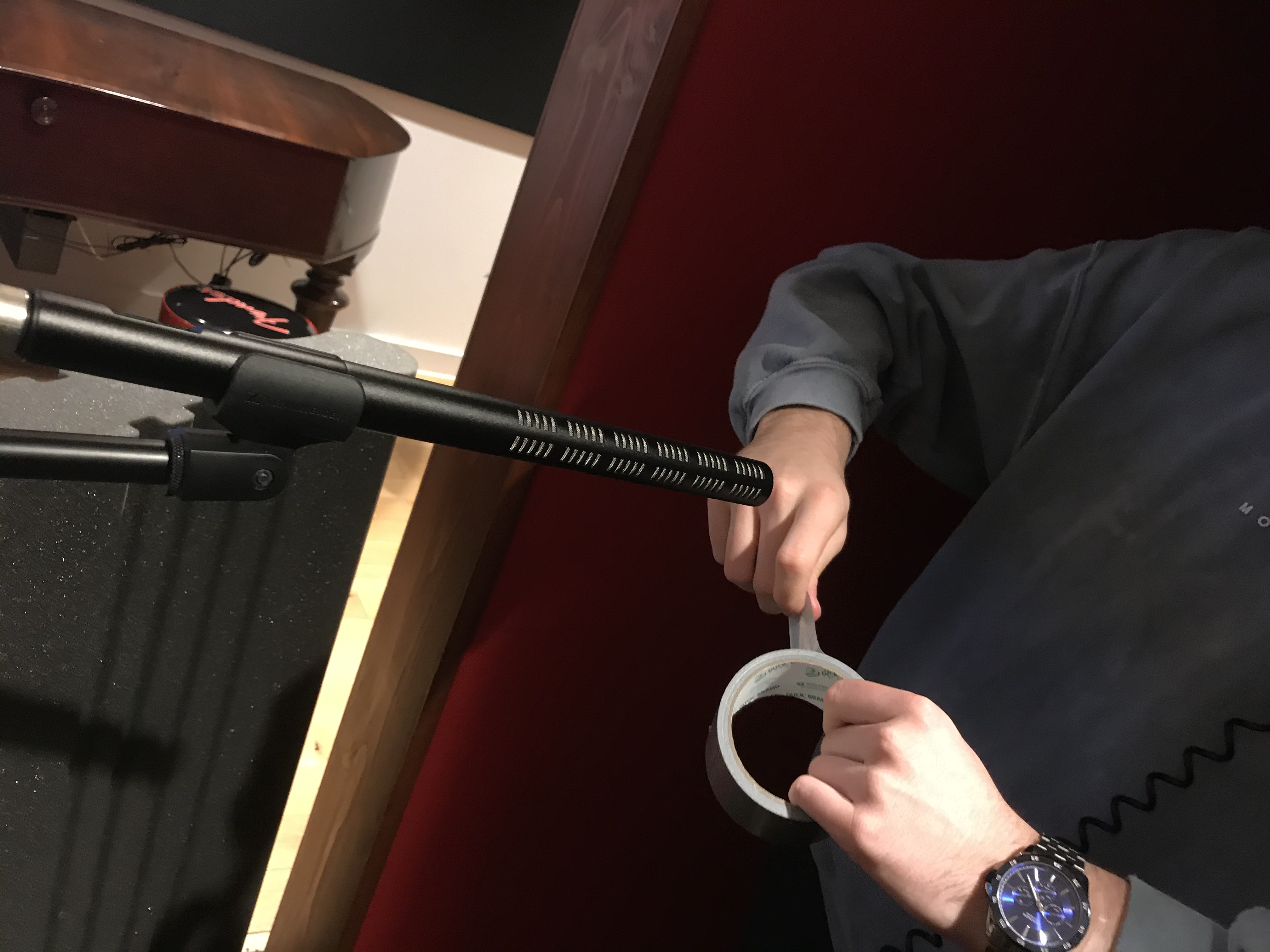
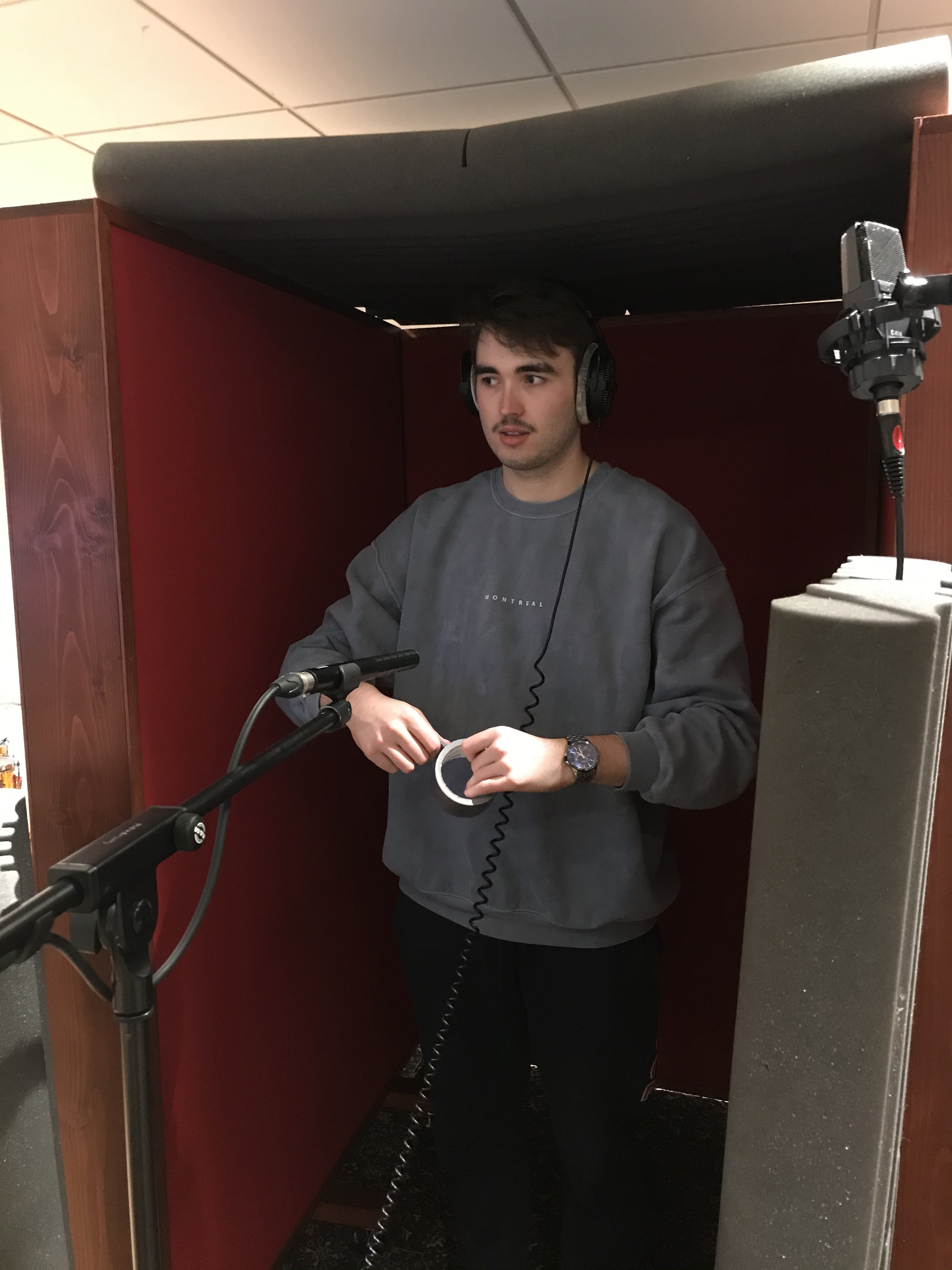
When it was time to record, this was a time-consuming part of the project. Finding the perfect sound and getting the timing right was the main focus for the session. We would repurpose sounds to use for parts of the foley. For example, in the Reservoir Dogs scene, there is a part where a guy cocks a gun. For this, we had to think outside the box to recreate this sound. I suggested using a pen click and adding some pitch shift and reverb to change the tone of the sound. We would re-record sections a couple of times to ensure we had it right. Also, to add ambience to the piece, we recorded the room sound and added reverb to create a room tone. By adding room tone, it adds an atmosphere to the clip, making it seem more realistic. This was an enjoyable part of the module as it was great using our imaginations to create sounds from items that didn’t relate to the original sound. It was also interesting working with other people and seeing what my team would come up with too.
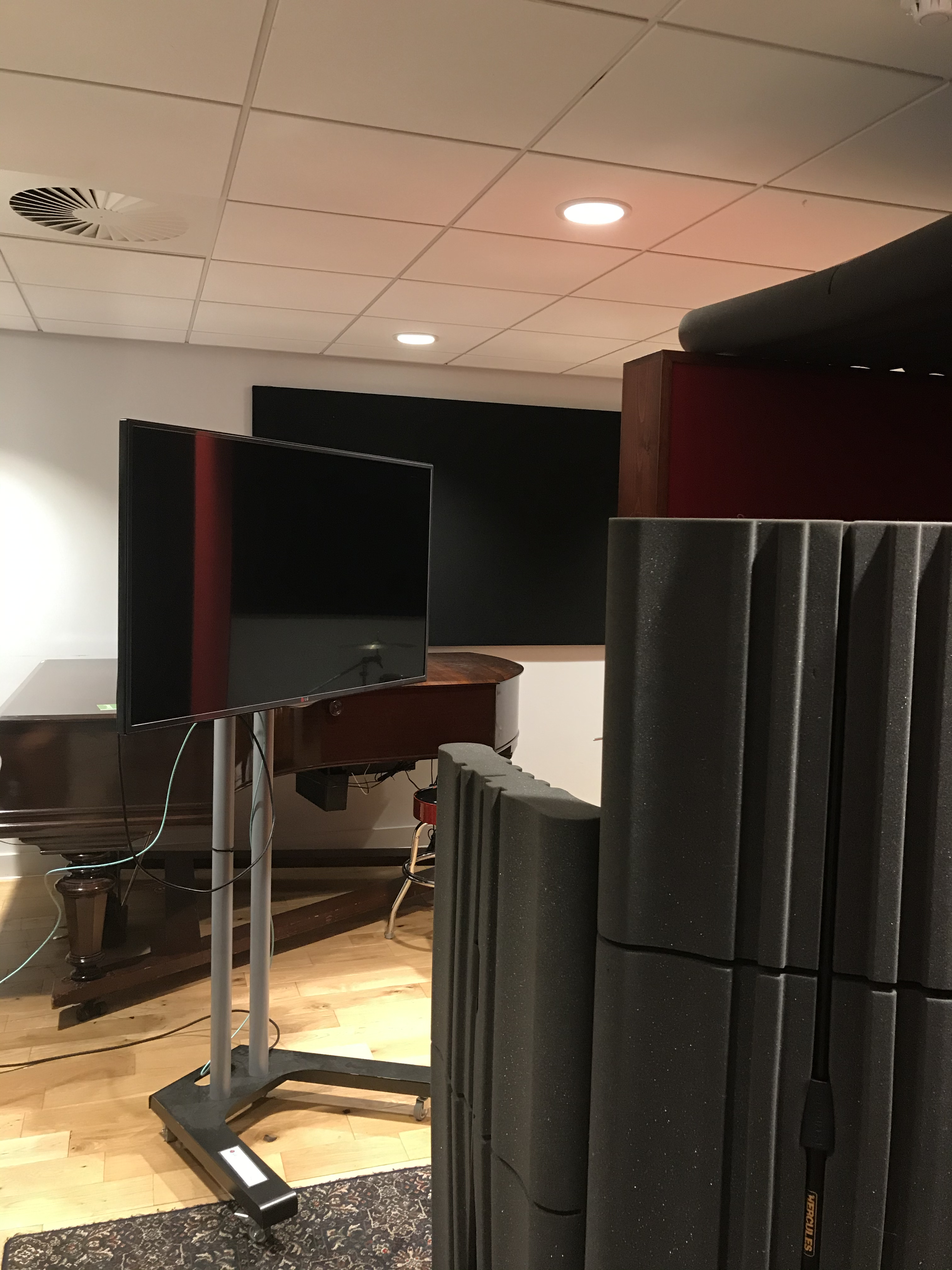
In the recording studio, we set up 3 GOBOS with a couple of extra padding to absorb any reflections. This reduced any backdrop noise and ensured that the microphone was only picking up the items we needed. In post-production, this meant there was less work for editing the background noise out.
It was important to take into consideration realism and hyper-realism recording. Realism recording is the recording that happens on set, in a live setting and not in post-production. Hyper-realism recording is a sound unrelated to the original sound, can sound “more real” than the original sound. Being able to use added effects, such as reverb, this can help to interpret the pen click to a gun clock which is a good example of hyper-realism.
Due to Covid, Cynan was unable to travel to University to do the voice acting. As a result, we decided Matt would do both voices as there are two males in the scene. Matt did a great job, learning the lines for both actors, and interpreting the two characters in a different way to create a realistic scene. To help us both, we added some PIPS to help with the timing of the audio, which was a big game-changer in saving significant time for recording. I personally thought this would be the most difficult area of the module. However, although it was time-consuming, it was the less tedious and we eventually got a system going for the dialogue.

The EBU (European Broadcasting Union) provide the regulations of audio signal levels in production, distribution and transmission of broadcast programmes. To measure loudness we have to consider the difference between momentary loudness or “short term sounds”. This could be a gunshot or a shout or raised voice and the overall average loudness of the full clip. The EBU follow the code (EBU-R128) to ensure the regulations are met.
To ensure these regulations are met there is a software called Izotope. This software features loudness metering tools, a spectrum analyser, and a loudness overflow alert. With just a few of these features, it allows us to visualise changes that are made in the mastering process. It is used so we can comply with the broadcast loudness levels in British and European television. If not used properly the TV show in this scenario wouldn’t be allowed to air.
Overall, I thoroughly enjoyed the Foley and ADR module. Due to difficulties with Covid this has affected the work. However, I believe we have done our best in the situation. I would have taken more time to record the foley better, ensuring we had every sound perfect, along with adding Cynan in for the other character.
 Skye McBride